Ground conditions first
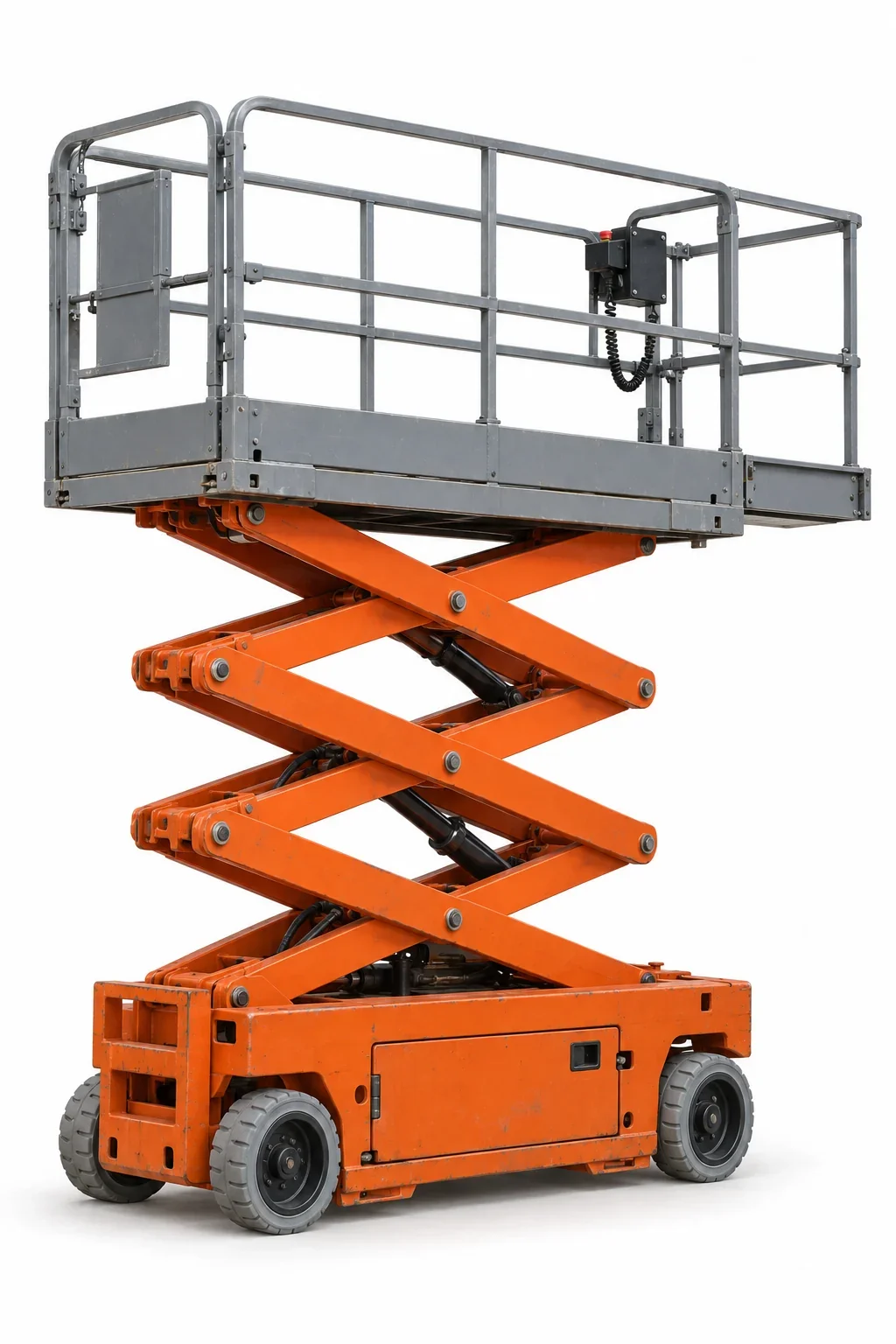
Unfinished lots, landscaped setbacks, and service yards can hold water and soften quickly. Rough‑terrain models add larger tires and higher ground clearance for traction and approach angles. Measure the longest travel path and any slopes between staging and the work zone.
Platform capacity vs. footprint
Exterior projects often involve heavier materials and multiple trades. Larger platforms help, but require more room to maneuver and stage. Confirm gate widths, overhead obstructions, and turning space near the building line.
Coastal factors around Sarasota
Salt‑laden air and wind near the shoreline can influence equipment condition and work windows. Inspect the site exposure and plan for equipment that will remain outdoors between shifts. Actual weather, the selected unit’s instructions, and site procedures govern exterior work.
When a different aerial type is better
If the task sits behind parapets, trees, or architectural features, a boom lift’s up‑and‑over geometry may be more efficient. Compare options at /boom-lift-rental/ and /aerial-lift-rental/. For material placement to balconies or roofs, a /telehandler-rental/ may suit the job better than a scissor lift.
Transitioning between surfaces
Many Sarasota campuses mix paved courtyards with sandy margins. Identify each surface the machine will cross; a rough‑terrain scissor may handle the unpaved sections while still fitting under exterior canopies.